
Subdivision Process
Subdivisions can confuse many, especially those unfamiliar with the terminology and process.
Here’s a straightforward breakdown outlining the key stages and considerations of your subdivision, making the concept more accessible and understandable.
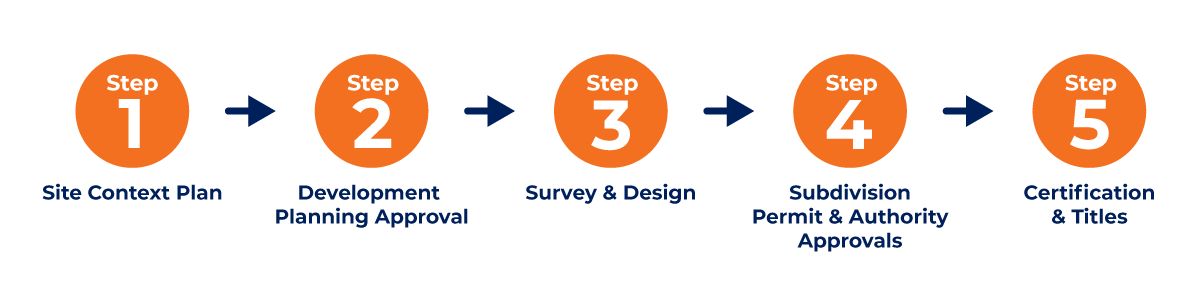
Subdivisions in Five Steps
Subdividing land can seem complex, but it follows a clear process. Whether you’re creating new lots for development or dividing property for family use, understanding the steps helps you plan with confidence. Below is a simple five-step guide to show how a subdivision works from start to finish
Step 1: Site Context Plan
The subdivision process begins with preparing a site context plan. This involves surveying the property and its surrounding area to capture boundaries, existing features, ground levels, nearby streets, and adjoining properties. The plan helps council and authorities understand the site conditions and how the proposed subdivision fits within the local area. It forms the base document used to assess planning requirements and guides the next stages of the subdivision process.
Step 2: Development Planning Approval
Before subdivision can proceed, you must apply for a development planning permit with your local council. This ensures your proposal complies with zoning rules, overlays, and local planning policies. Council will outline any conditions that need to be met.
Step 3: Survey & Design
A licensed land surveyor visits the site, measures the property, and prepares a detailed plan of subdivision showing the new lot boundaries.
Step 4: Subdivision Permit & Authority Approvals
The proposed subdivision plan is lodged to council for subdivision planning permit. It is then referred to service authorities such as water, power, gas, and telecommunications providers. Each authority confirms the lots can be serviced and may impose conditions (e.g., new connections). Council also reviews and approves compliance.
Step 5: Certification & Titles
Once all conditions are satisfied, council certifies the subdivision plan and issues statement of compliance. The final plan is then lodged with the titles office by your legal representative, where new land titles are created for each lot. At this point, the subdivision is legally complete and the lots can be sold or developed.
Services you may need
You may find that you need to contact certain services along the way. Click below to see a list of recommended businesses that we have worked with and trust.